
Media Literacy
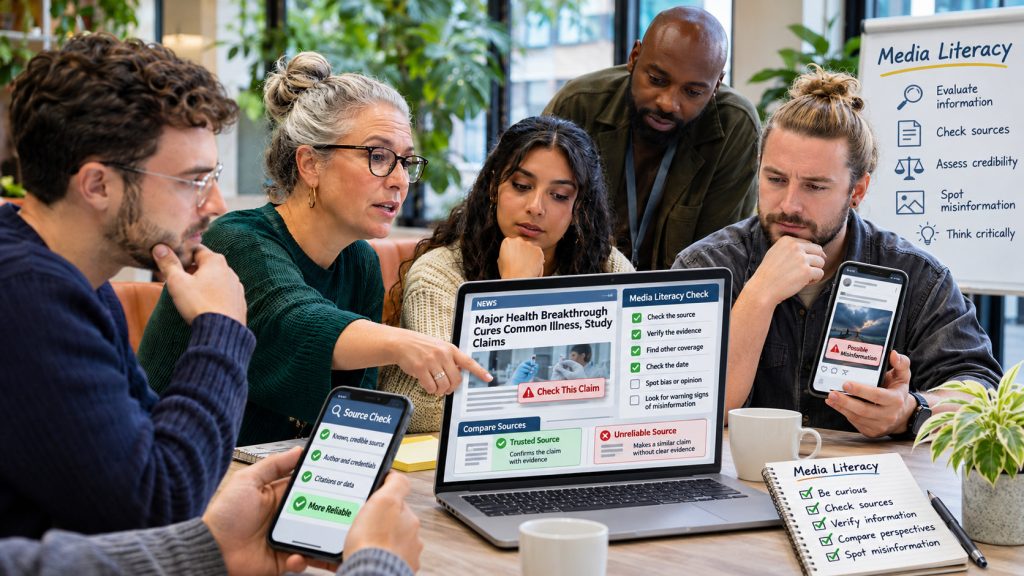
Practical training that helps people question what they see online, check whether information can be trusted and navigate digital media more safely and confidently.
At a glance
- Practical and interactive
- Builds critical thinking and fact-checking skills
- Covers misinformation, social media and online safety
Aim
Help learners understand how modern media influences what they see, think and share, and give them practical tools to assess information, recognise misleading content and make safer, better-informed decisions online.
Why?
We are surrounded by more information than ever, but not all of it is accurate, impartial or created with our best interests in mind. Understanding how information reaches us, how to check it and how algorithms, scams and misinformation can influence us is an increasingly important everyday skill.
Who is it for?
Suitable for organisations, community groups and teams that want to improve digital confidence, critical thinking and online safety. No specialist knowledge is needed.
What's covered
- Understanding media and how information reaches us
- Checking sources and assessing credibility
- Misinformation, disinformation and misleading content
- Recognising bias and thinking critically about what we see
- Social media, algorithms and how they influence our feeds
- Digital safety, privacy, scams and responsible sharing
Learning objectives
- Understand how different forms of media can influence information and opinion
- Assess whether a source or piece of content is likely to be reliable
- Recognise common signs of misinformation, manipulation and bias
- Understand how social media algorithms influence the content people see
- Apply practical fact-checking techniques before acting on or sharing information
- Use online services and social media more safely and confidently
Training options available
- Live online session
- Face-to-face session
Interested in this training?
We can tailor the delivery to suit your organisation, your team and the way you want people to learn. Get in touch to talk through your requirements, availability and pricing.
Prefer email? info@consumerfriend.org.uk
Other courses
Practical, plain English training built around real customer interactions. Pick the course that fits your team, or combine them.

1 to 2 hours
Vulnerability & customer support
Consumer Vulnerability
Practical training that helps organisations understand consumer vulnerability, recognise the barriers people may experience, and make services clearer, fairer and more inclusive.

3 hours
Communication & customer experience
Consumer Rights Training
Practical, interactive training that helps organisations understand consumer rights and apply the Consumer Rights Act 2015 with confidence. Through real-world examples, learners explore the legal requirements for goods, services and digital content, understand the remedies available when things go wrong and develop the skills to handle consumer issues fairly and effectively.

1 hour
Communication & customer experience
Handling AI Generated Complaints
Practical, interactive training that helps organisations understand how artificial intelligence is changing consumer complaints. Learners explore the opportunities and challenges of AI-assisted complaints, develop skills to identify the real issues, check facts and respond fairly, clearly and confidently while keeping complaint handling human.