
The Product Safety Risk Nobody Talks About
Why confusing instructions may be creating risks for consumers
Reading time: 6–7 minutes
Reading age: approximately 11–12 years
By Louise Baxter MBE
I recently bought a desk lamp online.
Nothing special, It was one of those modern desk lamps with touch controls, different light settings and a charging port built into the base.
Did I read the instructions?
Of course not.
My standard approach to most products is:
Take it out of the box.
Press every button.
Wiggle everything that looks like it might move.
If that doesn't work, reluctantly look for the instructions.
I don’t think I am alone in this approach.
Most consumers don't sit down with a cup of tea and read a product manual cover to cover before using a desk lamp. We poke. We prod. We experiment. Then, when something doesn't work as expected, we reach for the instructions or in my case someone else with the words “HELP, its broken!” it never is!.
And that's exactly why instructions matter.
Not because consumers always read them.
But because when they do, they need to be understandable.
The moment I finally opened the leaflet
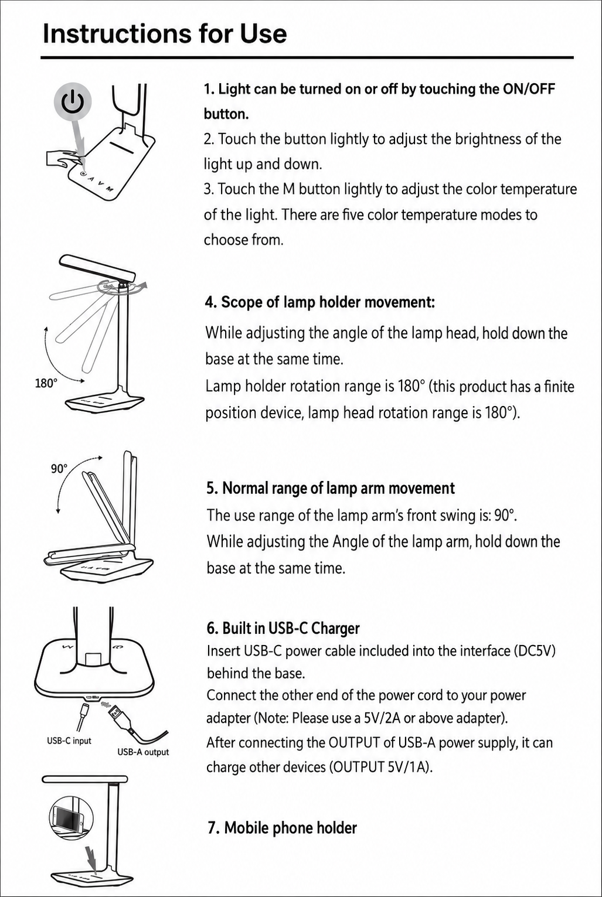
I opened the instruction leaflet expecting to find a simple explanation of the controls.
Instead, I found phrases such as:
Lamp holder rotation range 180°
and
Please use a 5V/2A adapter.
Now, I spend most of my professional life working in consumer protection.
I read legislation for fun.
I voluntarily attend consultations about product safety.
And even I found myself thinking:
"What does this actually mean?"
More importantly, what would it mean to:
An older consumer?
Someone with a learning disability?
Someone whose first language isn't English?
Someone with sight loss?
Someone who is tired, stressed or distracted?
Someone who has only opened the instructions because Plan A (pressing random buttons) failed?
The hidden product safety issue nobody talks about
When we talk about product safety, we usually think about things catching fire.
Or exploding.
Or falling apart.
Those things matter.
But there is another risk that receives far less attention.
What happens when the information designed to help consumers use a product safely cannot easily be understood?
Because if a consumer cannot understand the instructions, can we really say they have received the information they need?
The desk lamp challenge
Let's compare two instructions.
Version one:
Lamp holder rotation range 180°.
Version two:
Move the lamp head until the light shines where you need it.
Both communicate the same thing.
Only one communicates it in a way that most consumers can immediately understand.
Likewise:
Please use a 5V/2A adapter.
versus
Plug the cable supplied into a charger and connect it to a mains socket.
The second version tells me what I need to do.
The first version makes me feel like I should have paid more attention in physics.
The issue isn't that technical information exists.
The issue is that technical information has replaced useful information.
Vulnerability isn't a niche issue
One of the biggest mistakes organisations make is treating vulnerability as something that only affects a small group of consumers.
The reality is that vulnerability is situational.
At some point we are all:
Tired.
Distracted.
Rushed.
Stressed.
Unwell.
Looking after children.
Looking after parents.
Trying to assemble something at 11pm because we've forgotten about it until the night before we need it.
Some consumers live with disabilities or health conditions that make information harder to access or process.
Others may simply be unfamiliar with the product they have just bought.
Good product information works for all of us. No one moans about things being too easy to understand.
Poor product information works only for confident consumers with time, patience and technical knowledge.
That is not inclusion.
That is exclusion by design.
Why this matters now
The Office for Product Safety and Standards (OPSS) is currently reviewing and modernising the UK's product safety framework to ensure it remains fit for a world of online marketplaces, connected products and rapidly evolving technology.
Much of the discussion focuses on emerging risks, online marketplaces and digital product information. However, one theme runs throughout the review: consumers need clear information, instructions and warnings that help them use products safely and confidently.
At the same time, proposals are being explored that could allow more product information to be provided digitally through QR codes and online resources.
There are clear benefits to this approach. Information can be updated quickly, made more detailed and tailored to individual products.
However, it also creates an important challenge.
What happens to consumers who:
Do not own a smartphone?
Have limited digital skills?
Use assistive technology?
Have poor internet access?
Struggle to scan QR codes or navigate online information?
If the future of product safety is digital, it must also be accessible.
The future of product safety must be inclusive by design.
A possible consumer test
While reviewing the instructions, I found myself wondering whether consumers needs a simple way to assess product information.
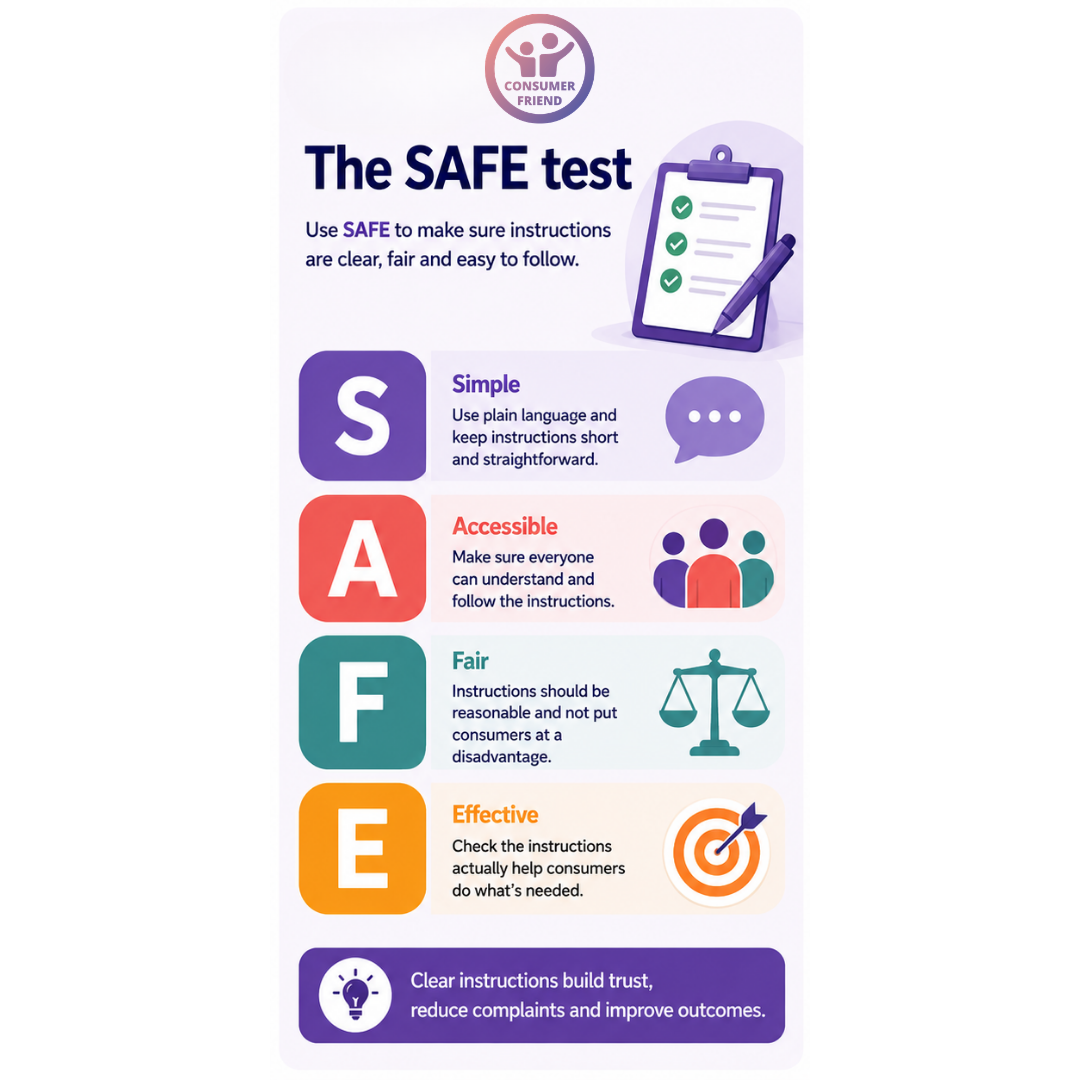
One idea is a SAFE Test.
Is the information:
S – Simple
Can an ordinary consumer understand it without specialist knowledge?
A – Accessible
Can consumers with different needs, abilities and levels of confidence access and use it?
F – Findable
Can consumers quickly locate the information they need?
E – Easy to act on
Does it clearly explain what consumers should do?
It's still a work in progress, but it asks an important question:
Can consumers actually use the information they're given?
Because consumers don't buy desk lamps to learn about voltage ratings.
They buy desk lamps because they want to see what they're doing. I wear very strong glasses and struggle with this on most days.
Ideally before they've pressed every button three times and accidentally changed the light from "warm reading glow" to "Blackpool at night".
My view
I believe every product information should be assessed in the same way we assess customer journeys, complaints processes and service design.
Not by asking:
"Has information been provided?"
but by asking:
"Can consumers understand and use it?"
There is a significant difference.
Many businesses still design information for the people who create products rather than the people who buy them.
Consumers should not need technical knowledge to understand a desk lamp.
Nor should they need to decode jargon, interpret engineering terminology or search online to work out how to use a product safely.
Good information should remove effort, not create it.
A new way to think about product safety
The Product Safety Review rightly focuses on new technologies, online marketplaces and emerging risks.
These reforms are important and necessary.
But as we modernise product safety, we should remember something fundamental.
A product is not truly consumer friendly if the information provided with it cannot be understood by the people expected to use it.
A warning that cannot be understood is not really a warning.
Instructions that cannot be followed are not really instructions.
And information that excludes consumers because it is overly technical, poorly translated or inaccessible is not consumer protection.
At Consumer Friend, we believe product information should be tested not only for compliance but for comprehension.
Because when consumers finally do what most of us inevitably end up doing, admit defeat and open the leaflet, it ought to help.
Not create another problem to solve.