
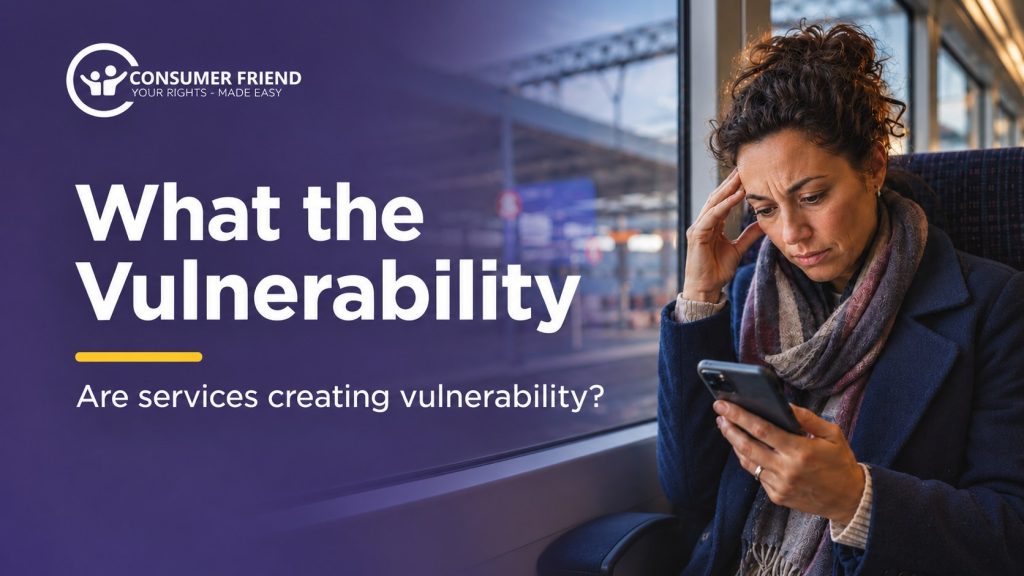
We often talk about “vulnerable consumers” as though vulnerability belongs to a particular type of person.
But vulnerability is not something people are. It is something people experience.
Stress, grief, disability, poor health, financial pressure or simply having too much to deal with can change what any of us can manage at a particular moment.
A confusing website, inaccessible form, complicated letter or chatbot loop can then make an already difficult situation worse.
That raises an important question:
Is the person vulnerable, or is the service creating vulnerability?
Our new thought leadership report, What the Vulnerability, written by Louise Baxter MBE of Consumer Friend and Hannah Gibson of Diverse Integration, explores why accessibility, inclusion and clear communication must sit at the heart of every service.
The report considers:
- How modern services can unintentionally create vulnerability
- Why accessibility must be built in from the beginning
- The customers and experiences organisations may never see
- The human and commercial cost of inaccessible services
- What genuinely inclusive service design looks like
- The questions every organisation should be asking
The message is simple: real people do not use services under perfect conditions. Good services must continue to work when life is not straightforward.
Would your service work for someone you care about on one of the worst days of their life?
At Consumer Friend, we help organisations turn these questions into practical action through training, consultancy and support with inclusive service design.
If you want your teams to think differently about vulnerability, challenge existing processes and create better consumer experiences, we'd love to hear from you.
Get in touch to explore training and support for your organisation.